“You talk three times faster than you type” is the line everyone reaches for, including us. It’s true, and it’s the least interesting reason voice coding works.
- Speaking is faster than typing: but only for the part where you were typing.
- The bigger win is the wait, which speech doesn’t shorten so much as delete.
- It is not faster for everything. Symbol-heavy work is still faster by hand.
The typing half, honestly
Comfortable speech runs at roughly 150 words a minute. Sustained prose typing, for most developers, lands somewhere around 40 to 60. So a four-sentence prompt that takes forty seconds to type takes about twelve to say.
That gap is real, and over a day of prompting it adds up. But it’s bounded: even if typing became instant, you’d only reclaim the seconds you spent typing. For most people that’s a few minutes an hour, noticeable, not transformative.
There’s a subtler version of the same effect that matters more. When a prompt is expensive to produce, you edit it in your head first. You compress. You drop the caveat that would have saved a round trip, because typing it felt like work. Speaking is cheap enough that you say the caveat, and the first answer comes back closer to right.
The half nobody measures
Here’s where the real time goes, and it isn’t typing.
You send a task. The agent works for ninety seconds. You have nothing to do for ninety seconds, so you open something else, and the something else has its own gravity. The agent finishes. You don’t notice. Twelve minutes later you remember and come back.
Nothing about faster input touches that. You can shave the prompt from forty seconds to twelve and still lose twelve minutes on the return trip, because the bottleneck was never the sending. It was that finishing made no sound.
Faster input saves you seconds. A reply that reaches you saves you the context switch.
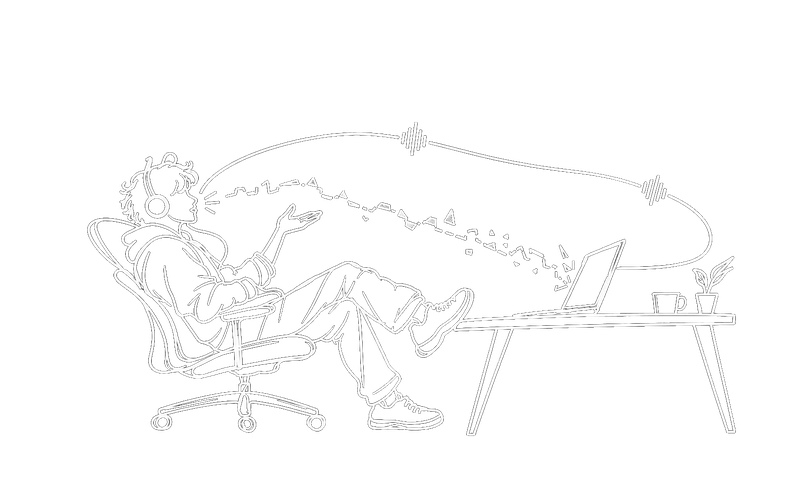
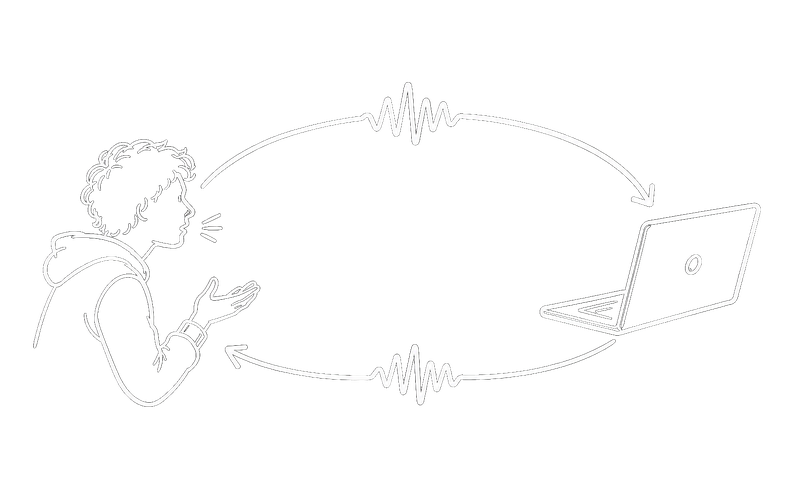
That’s the reframe: measure the loop, not the keystroke. An agent that answers out loud when it’s done doesn’t make the work faster, it stops the finished work from sitting there unclaimed.
When it isn’t faster
Worth saying plainly, because the honest answer to “is voice coding faster” is for some things:
- Dictating literal syntax is slower. Saying a line of code symbol by symbol takes longer than typing it and produces more errors. That is what dictation was, and it earned its reputation.
- Precise identifiers are awkward. Long or unusually-spelled names are still easier typed than spoken.
- Anything you’d rather review first. Some changes want a written prompt you can re-read before sending.
- Shared offices without headphones. Not a speed issue, but it’s real.
The pattern: voice wins where you’re expressing intent and loses where you’re specifying characters. That’s the same line that separates how voice coding differs from dictation.
Some people genuinely prefer typing, and they are not wrong
It is worth taking this seriously rather than waving it away, because the objection is usually correct on its own terms.
For a short prompt, typing often is faster. “fix the failing test” takes about two seconds to type. Saying it means reaching for a key, waiting for the transcription to land, and glancing to check it heard you right. On a five-word instruction, speech has overhead that typing does not.
There is also a real preference underneath it. Some people think better with their hands. Typing is quiet, private, precise, and it does not require you to have decided what you mean before you start. Plenty of good developers compose at the keyboard the way other people compose on paper, and telling them that is inefficient misunderstands what they are doing.
So the honest version of the claim is narrower than the marketing version:
- Short, precise instructions: typing wins, or it is close enough not to matter.
- Long or exploratory requests: voice coding wins clearly, and the gap widens the more context you are carrying.
- Anything with an answer coming back: voice wins by a different mechanism entirely, because it removes the trip back to the terminal.
That middle case is where most real work sits. The prompts that actually move a project forward are rarely five words. They are three sentences with a constraint, a preference, and a reason, and typing three sentences costs enough that you start trimming them, which is where the quality goes.
The part nobody tells you about the habit
Here is what we did not expect, and what most people report after a week or two: the ratio stops mattering.
You stop deciding case by case whether this particular thought is worth speaking or typing. Speaking becomes the default for anything longer than a few words, typing stays for the precise bits, and you stop noticing the switch. It becomes the same kind of unconscious choice as reaching for the mouse instead of a keyboard shortcut.
And then going back is genuinely unpleasant. Sitting in front of an agent that cannot hear you, typing out a paragraph you could have said in eight seconds, waiting silently for it to finish because it has no way to tell you, feels like an obviously worse arrangement that you had simply never questioned.
That is the honest sales pitch and the honest warning at the same time: the first day is a novelty, the first week is a preference, and after that it is just how you work.
So, is it faster?
Yes, but not mostly for the reason people expect. The keystrokes you save are the small part. The part you feel at the end of the day is that you stopped being the mechanism by which finished work gets noticed.
If you want to test it on your own workflow, the fastest way is the five-step setup, connect one project, spend an afternoon, and notice how often you would have tabbed away.