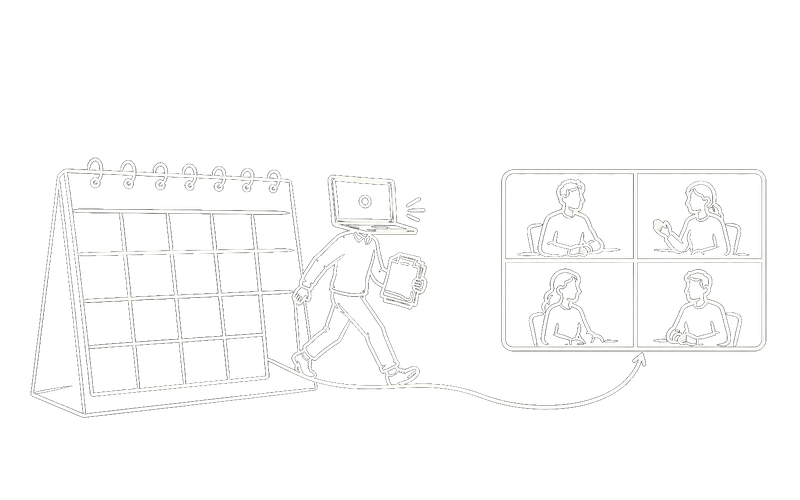
Meeting notes get read. They get read the week after, when somebody needs to check what was agreed, and by whoever missed the call. The problem is not that nobody reads them. It is that reading is all you can do with them.
A summary is a record, and a record is passive. Somebody still has to open it, work out which parts apply to them, and turn those into things that happen. That translation step is where the value quietly leaks out, and it leaks out of good notes just as easily as bad ones.
The gap between record and action
Think about what actually follows a meeting where something was decided. Someone needs to update a config. Someone needs to open a ticket. A deadline moved, so a README is now wrong.
All of that is knowable from the transcript. None of it happens because of the transcript, because the transcript is a file and files do not do anything. The work of translating it back into changes falls on a person who was already in the meeting and now has less time than before.
A summary tells you what was said. It has no opinion about what should happen next.
When the reader is your agent
This is the part that changes when the meeting transcript lands somewhere your coding agent can already reach.
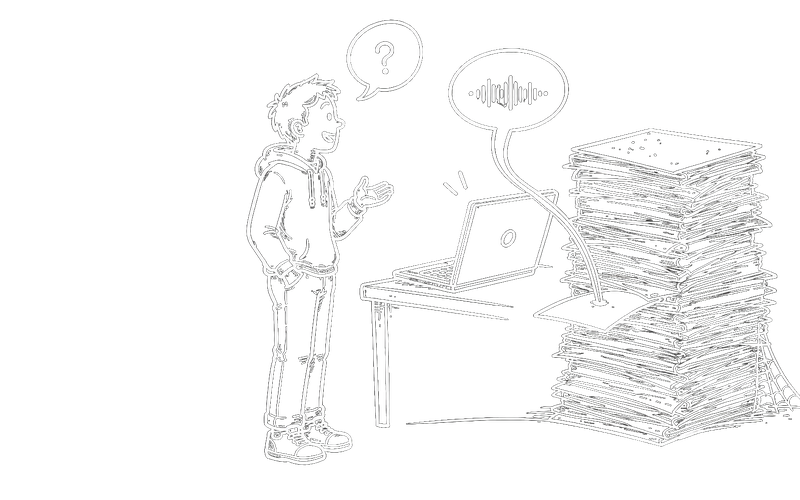
Instead of reading the notes, you ask about them. Out loud, in the same voice coding loop you use for everything else:
“From that meeting, what did we agree about the rate limits, and does the current config match it?”
That is a question no summary answers, because it spans the transcript and the repository at once. Your agent has both. It can check what was said against what is actually in the code, and tell you where they disagree.
The notes stop being a record you are supposed to have read and become something you can interrogate.
Recorder and notetaker are two different jobs
Worth separating, because they get conflated and they solve different problems.
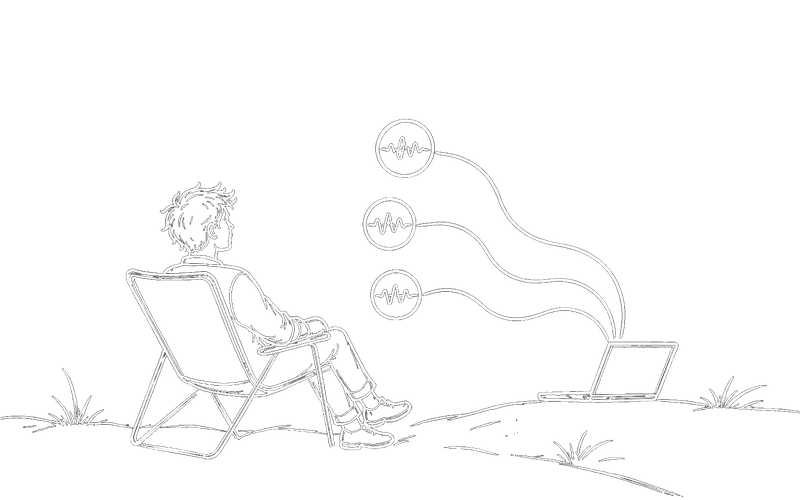
The recorder is a capture device. Mic plus system audio from whatever meeting app you are in, transcribed on-device, speaker-tagged. Its job is fidelity: getting an accurate record of who said what, including the bit nobody thought was important at the time. It runs while you are in the call, and nothing joins the meeting.
The notetaker is an interpreter. It takes that transcript and produces the summary, the decisions and the action items. Its job is compression: deciding what mattered.
Most tools give you one artefact and blur the two. Keeping them separate matters because compression is lossy and you cannot know in advance what you will need. The summary is what you read on the day. The transcript is what you go back to in six weeks when somebody asks whether that deadline was agreed or floated, and the answer turns on the exact phrasing.
Having both, locally, means the summary can be wrong without being expensive. You can always ask a better question of the raw thing.
Why it matters that this is local
The recorder captures your mic and system audio, transcribes on-device with speaker tagging, and hands the result to your agent. Nothing joins the call and nothing is uploaded.
That has a practical consequence beyond privacy. Because the transcript is a local file rather than a record inside somebody’s SaaS, your agent can treat it like any other project context. There is no integration to configure and no export step. The meeting is just more information the agent has.
It also means the meetings you would never put a third-party notetaker into are the ones this works for. Those tend to be the meetings where the decisions actually get made.
The habit worth forming
Do not read the summary. Ask it three questions instead:
- What did we decide that affects code I own?
- What did I commit to, in my own words, and by when?
- What contradicts what is currently in the repository?
The third one is the reason to bother. It is the question a human reader almost never asks, because answering it means holding a transcript and a codebase in your head simultaneously. It is also where the expensive misunderstandings live.
If you have not set up the recorder, it lives in the same widget as the rest of it, and it is free and unlimited. More on both options in recorder or bot: two ways in.