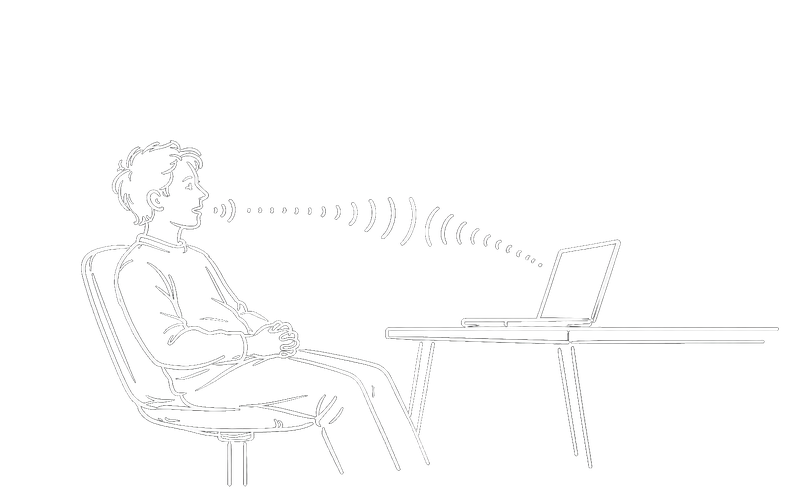
The most useful thing about an agent that speaks is not that you can talk to it. It is that you can stop looking at it.
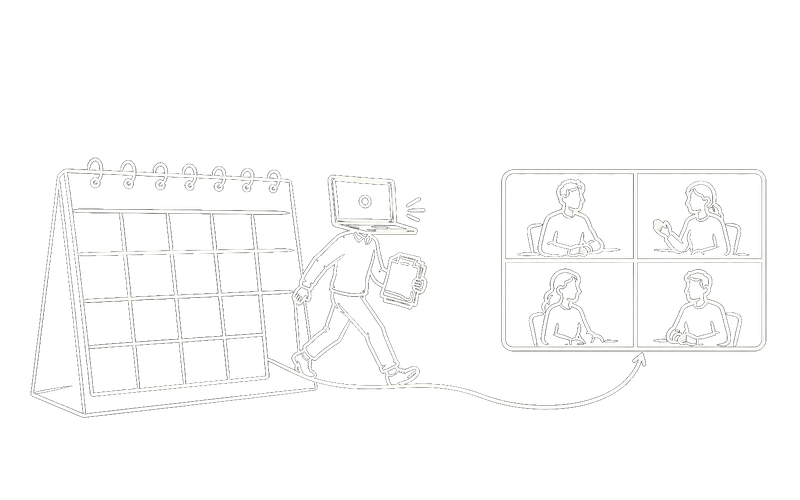
For as long as software development has existed, the work has been anchored to a rectangle. Not because thinking requires a screen, but because that is where the input and the output both lived. Voice coding breaks that link, and the consequence is stranger than it sounds.
The screen was an accident
Consider what actually needs the display. Reading a diff does. Scanning a stack trace does. But deciding what to try next, hearing what happened, and saying what to do about it: none of those need pixels at all. They only ended up there because there was nowhere else to put them.
Once the agent can tell you what it found and you can answer, a real portion of the loop stops being visual. You are still working. You are just not looking at anything.
Where people actually end up
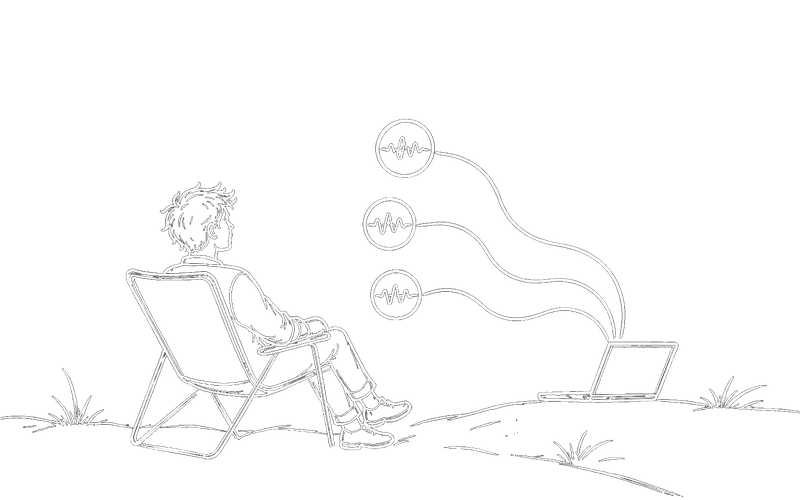
The pattern that emerges is not dramatic. Nobody codes an entire feature from a hiking trail. What happens is smaller and more frequent:
- Making coffee while a test suite runs, and answering the question it comes back with.
- Pacing during the part of a problem where sitting still is actively unhelpful.
- Walking to lunch and kicking off the refactor you thought of on the way.
- Standing at the window for the ninety seconds a build takes, instead of opening a new tab.
That last one is the sleeper. The ninety-second wait is the most reliably wasted unit of time in software, because it is too short to start anything and too long to just sit there. It is also exactly long enough to lose your thread.
The best thinking rarely happens in the chair. It just used to have nowhere to go.
Why movement helps
There is a reason the shower and the walk have their reputation. Being away from the problem loosens the grip it has on you. The solution that would not come while you stared arrives thirty seconds after you stop.
The historical catch was that the insight arrived somewhere you could not act on it, so you carried it back, and some of it evaporated on the way. Being able to say it the moment it lands closes that gap. The idea goes straight into work instead of into short-term memory.
The specific thing this fixes
Here is the concrete version, because “work from anywhere” is a travel-blog sentence and this is not that.
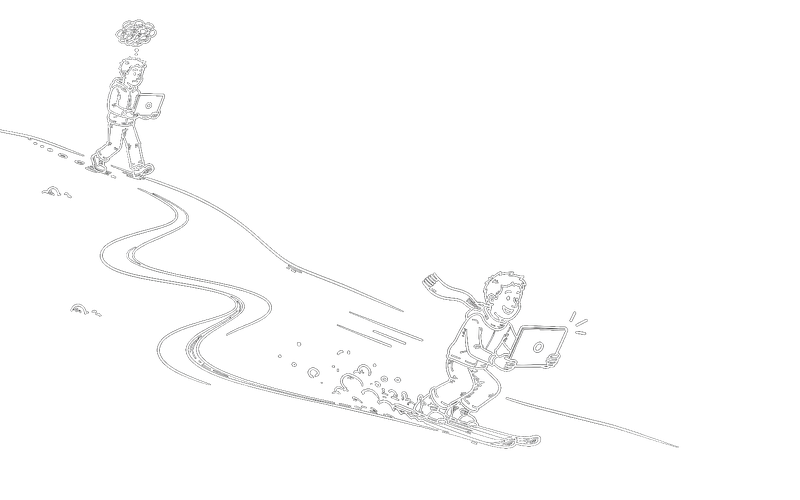
You are stuck. Not confused about syntax, properly stuck, where you have been staring at the same forty lines for twenty minutes and every idea you have is one you have already tried. Every developer knows the physical sensation of this, and everybody knows the only reliable cure is to leave.
But leaving has always cost something. You stand up, and the moment you stop looking at the problem it starts to fade. The solution arrives at the kettle, and by the time you are back at the chair it has lost half its detail, and you spend the first five minutes reconstructing what you already knew.
Being able to say it the second it lands is the whole thing. Not because talking is faster than typing, but because the idea goes directly from your head into work without passing through short-term memory, where it degrades.
It also gives you permission
There is a less technical effect that matters more than it should.
Standing up during a build feels like slacking. Sitting and watching a progress bar feels like working, even though it produces nothing. Most people sit, because leaving the desk while something is running looks like leaving the desk.
When the agent tells you it is done, the calculation changes. You are not walking away from the work, you are waiting for it somewhere else, and it will come and find you. That sounds like a small psychological trick. In practice it is the difference between eight hours in a chair and eight hours of actually thinking, and the second one is both better work and a better day.
What this is not
Worth being clear, because this is the kind of claim that gets oversold.
You are not going to review a large diff by ear, and you should not try. Reading code remains a visual act. Anything requiring precision, comparison or careful attention belongs on a screen, and no amount of voice changes that.
What moves off the screen is the conversational layer: the deciding, the asking, the being told. That is a smaller slice than the enthusiasts imply and a much larger one than you would guess before trying it.
If you want to test it, pick the next ninety-second wait and leave the desk instead of opening a tab. That is the five-step setup.